Warehouse robotics deployments accelerated in 2026. Amazon operates over 750,000 robots across its network. These systems now handle more than 75% of customer orders. Major players like Symbotic, Dexterity, and Ambi Robotics rolled out integrated physical AI solutions. Market growth projections point toward $14 billion for mobile robots by 2030, with a 19% annual rate.
Labor shortages and congestion remain core warehouse problems. New AI traffic systems from MIT and Symbotic deliver up to 25% higher throughput by prioritizing robots and preventing bottlenecks. Partnerships such as Ambi Robotics with Pickle Robot automate inbound truck unloading and palletizing in continuous flows.
Automate 2026 highlighted practical advances in cobots, vision systems, and safety sensors. These tools address real operational gaps without replacing entire workforces.
Key 2026 Deployments and Partnerships
Amazon introduced several targeted robots in 2026. The Vulcan robot uses advanced sensing for pick-and-stow tasks in hard-to-reach pod locations. It reduces the need for ladders and awkward reaches.
The Tipper robot transfers packages from carts to conveyors automatically. Echelon manages package flow on belts. Six-sided scanners eliminate manual label reading. These systems started in European facilities with global expansion planned.
DHL reported 30% gains in units picked per hour from item-picking robots and 20% efficiency lifts from autonomous forklifts. The company accelerated automation in 95% of its global warehouses.
Brightpick partnered with Trew to combine AI-powered storage and fulfillment. Dexterity expanded collaboration with Kawasaki Robotics for physical AI scaling in logistics.
AGIBOT reached a milestone with its 15,000th robot produced. Apptronik unveiled Apollo 2 humanoid alongside a new Robot Park training facility.
How AI Solves Traffic and Congestion Issues
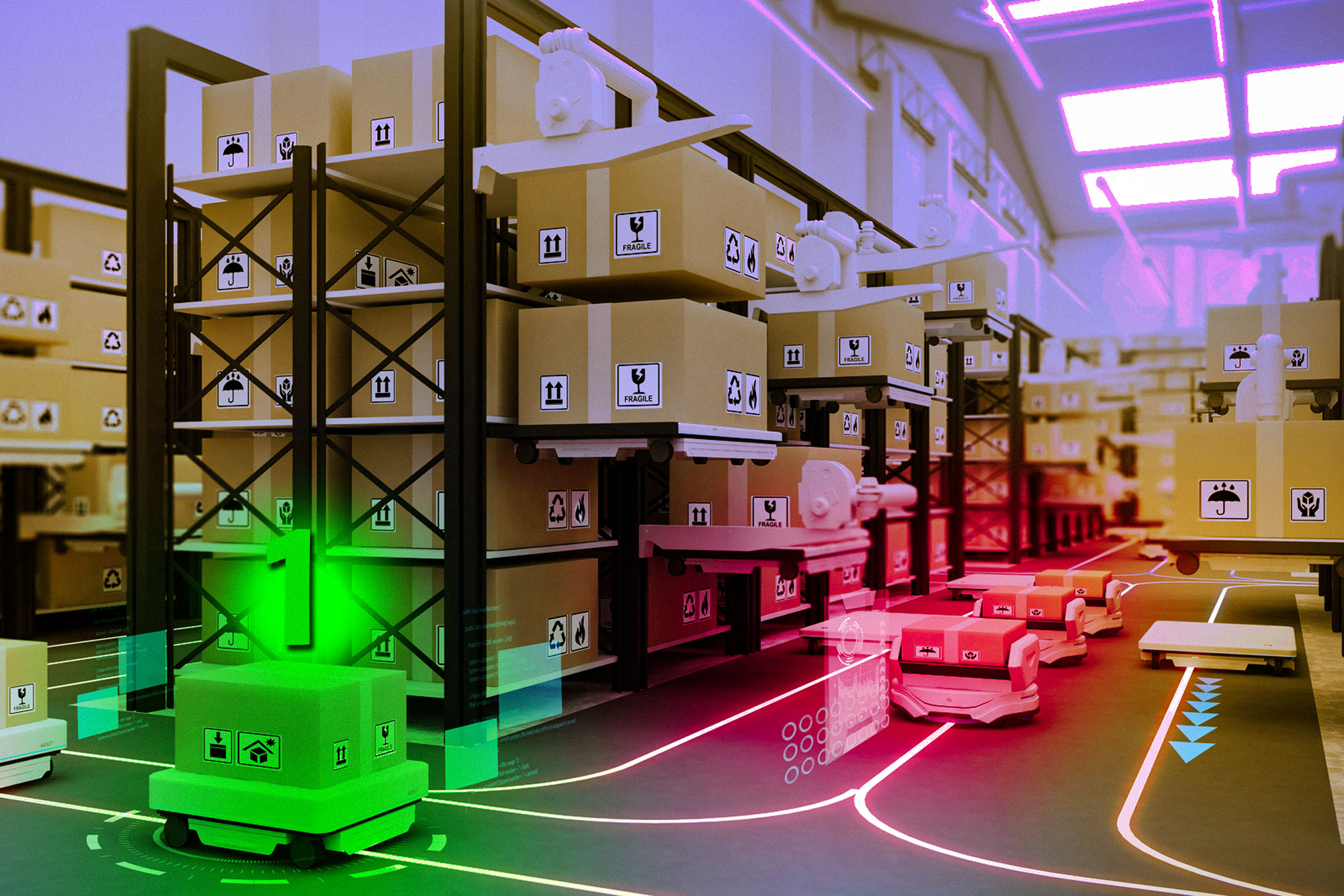
High robot density often creates slowdowns. Traditional algorithms struggle as complexity grows exponentially. MIT and Symbotic developed a hybrid system using deep reinforcement learning plus classical planning.
This approach learns to grant right-of-way dynamically. It reroutes robots before jams form. Simulations on real-inspired e-commerce layouts showed 25% better package delivery per robot. The system adapts quickly to different warehouse sizes and layouts.
Such tools matter because even 2-3% throughput gains deliver major cost savings in large facilities. They reduce the need for full shutdowns during congestion events.
Types of Robots Driving Results
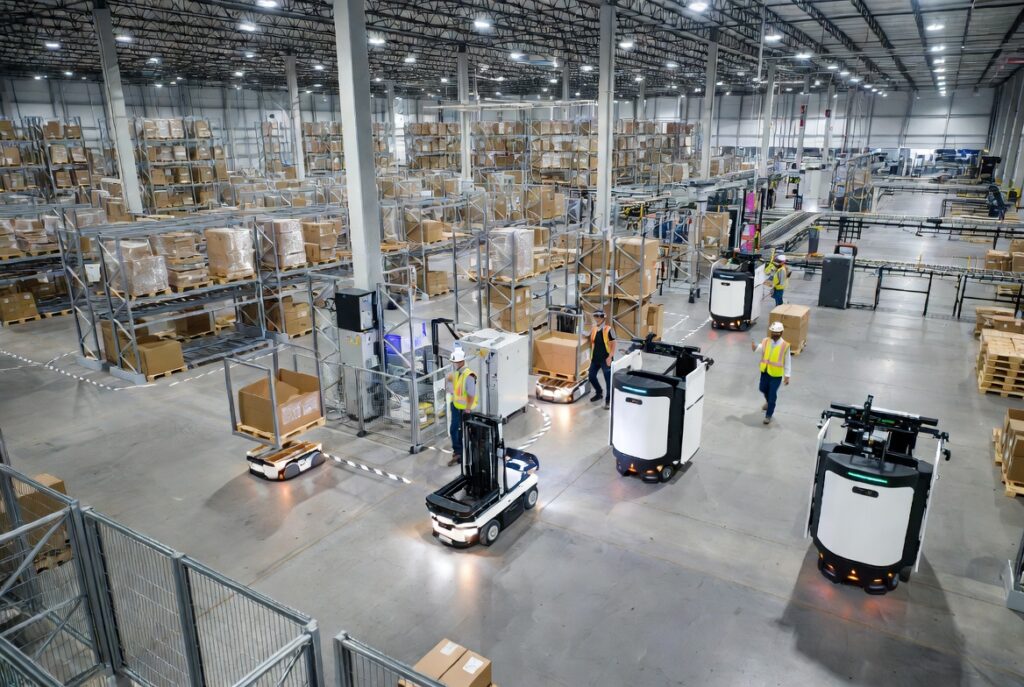
Autonomous mobile robots (AMRs) excel at transport and goods-to-person tasks. They offer flexibility over older guided vehicles. Order fulfillment robots are projected to make up about 50% of mobile robot shipments by 2030.
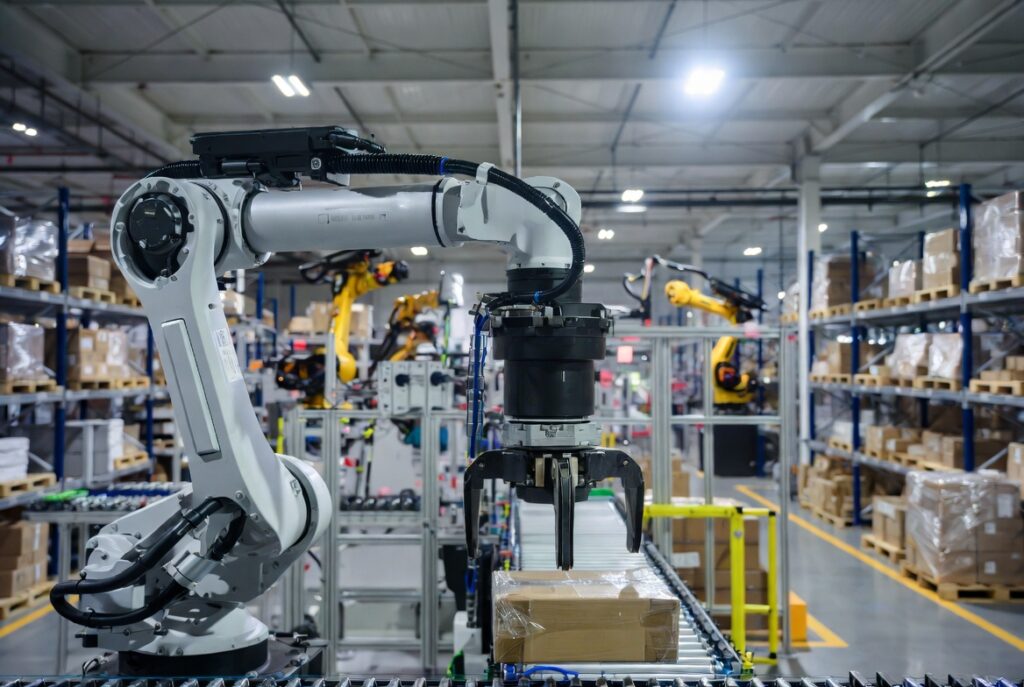
Picking and palletizing arms handle repetitive motions accurately. Doosan’s PalletizHD+ integrates AI for simplified operations. Geek+ solutions boosted picking efficiency by up to 67% in some deployments.
Humanoids like Boston Dynamics Atlas and Agility Robotics models target physically demanding work. They fit into existing warehouse layouts alongside humans.
Specialized systems focus on trailer unloading. These cut manual heavy lifting and speed inbound processes to hundreds of cases per hour.
Measurable Benefits for Operations
Real deployments show consistent gains. Item-picking robots increased units per hour by 30% in tested DHL sites. Autonomous forklifts added 20% efficiency.
Safety improvements appear through reduced manual handling. Amazon emphasizes creating more ergonomic, high-skilled roles as robots take repetitive tasks.
Cost models vary. Some providers offer robots with no upfront capital via subscription-style arrangements. This lowers barriers for mid-sized warehouses.
Integration with warehouse management systems (WMS) unlocks real-time optimization. Analytics platforms provide visibility into robot performance, route efficiency, and labor allocation.
Practical Implementation Steps
Start with a bottleneck audit. Identify high-volume, repetitive, or injury-prone areas like unloading, picking, or sorting.
Pilot one or two robot types first. Measure baseline metrics—picks per hour, error rates, and worker travel distance—before and after.
Plan integration carefully. Modern systems connect to existing WMS and support hybrid human-robot workflows. Test safety features thoroughly, especially new ultrasonic sensors and vision systems certified for collaboration.
Train staff on oversight and maintenance rather than manual labor. Focus upskilling on higher-value tasks like exception handling and process optimization.
Scale gradually. Modular designs allow expansion without full system overhauls. Monitor ROI through throughput, labor productivity, and injury reduction data.
Market Outlook and Considerations
The warehouse robotics sector continues steady expansion. Mobile robot revenue is outpacing fixed automation. Demand comes from e-commerce, 3PL providers, and food/grocery sectors.
Emerging developments include better tactile sensing, full-stack software platforms, and improved multi-robot coordination. Safety standards evolve, requiring updated compliance from suppliers.
Warehouses succeed by treating robotics as augmentation. They combine robot strengths in consistency and endurance with human judgment for exceptions.
For deeper context on robotics history and classifications, see the Warehouse robot entry on Wikipedia.
Final Takeaways for Warehouse Operators
2026 warehouse robotics news shows mature, deployable solutions rather than experimental concepts. Targeted implementations deliver measurable improvements in speed, safety, and cost control.
Review your current operations against these benchmarks. Focus on specific problems—congestion, manual lifting, or scaling capacity. Match them to proven robot categories and vendors.
Early, thoughtful adoption positions facilities competitively as e-commerce and supply chain demands grow. Track ongoing developments through industry events and supplier pilots.
This space moves fast. Practical data from real deployments provides the clearest guidance for decisions.