
3 Tags:
Starlink leads the satellite internet market in 2026 with over 9,000 satellites in low Earth orbit (LEO), delivering typical speeds of 50-350 Mbps and latency around 25-50 ms for millions of users. Yet competitors are advancing quickly. Amazon Leo prepares for broader rollout later this year, while established providers like Viasat and HughesNet serve rural customers reliably today.
This guide compares the main options based on current performance, pricing, and real-world use. It helps you match the right service to your needs—whether rural home, mobile travel, or business—using up-to-date data on speeds, costs, and coverage.
Key factors include orbit type, which affects latency and reliability, plus total ownership costs that go beyond monthly fees. Many users combine options for better results, such as cellular as primary with satellite backup.
Understanding Starlink vs. Competitors – Key Technologies
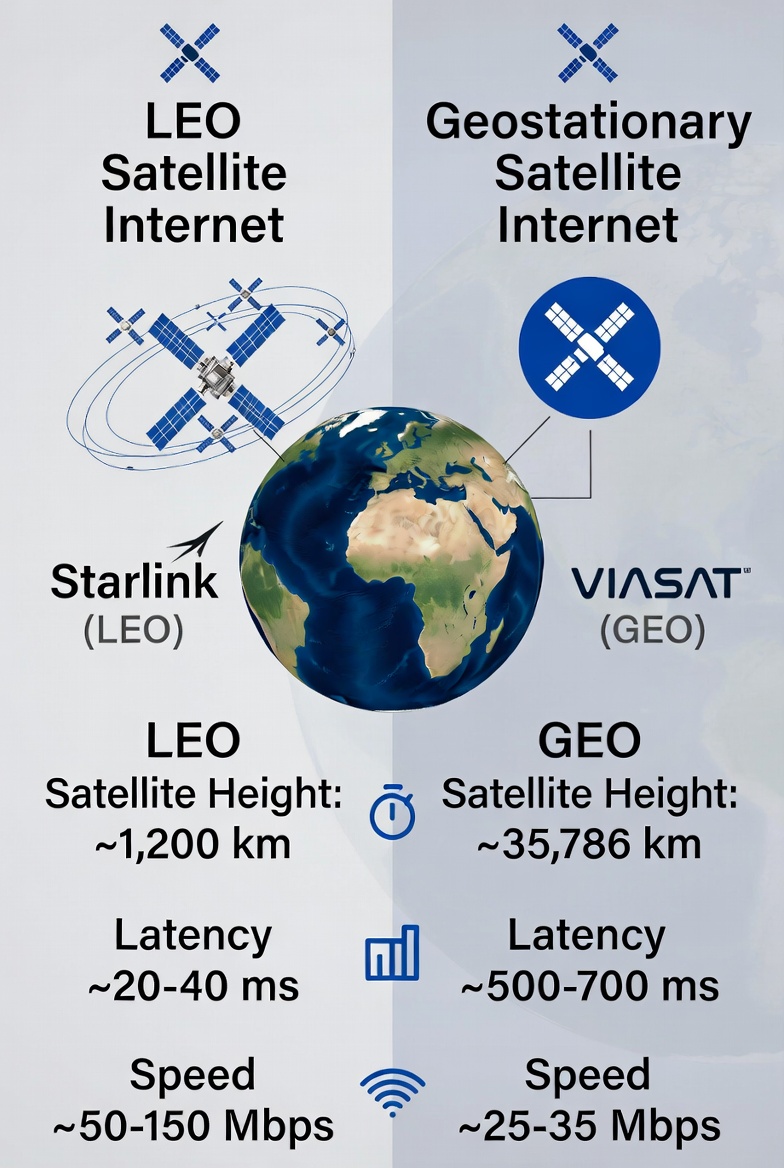
LEO systems like Starlink and Amazon Leo place satellites closer to Earth for lower latency and faster speeds. GEO systems, used by Viasat and HughesNet, stay fixed above one spot but introduce higher delays around 600 ms.
LEO advantages include better performance for video calls and gaming. GEO strengths appear in consistent coverage for fixed locations and sometimes lower equipment prices.
Medium Earth orbit (MEO) options from SES offer a middle ground with latency around 150 ms. Direct-to-cell services, such as those from AST SpaceMobile partnering with carriers, aim to connect standard phones without extra hardware.
These differences matter most based on your location and activities. For definitions of satellite orbits, see the Wikipedia page on satellite constellations.
Alt text: Diagram illustrating LEO and GEO satellite technology differences for broadband internet.
Top Starlink Competitors Compared (2026)
Here is a side-by-side look at leading options. Data draws from provider reports, testing, and industry updates as of mid-2026.
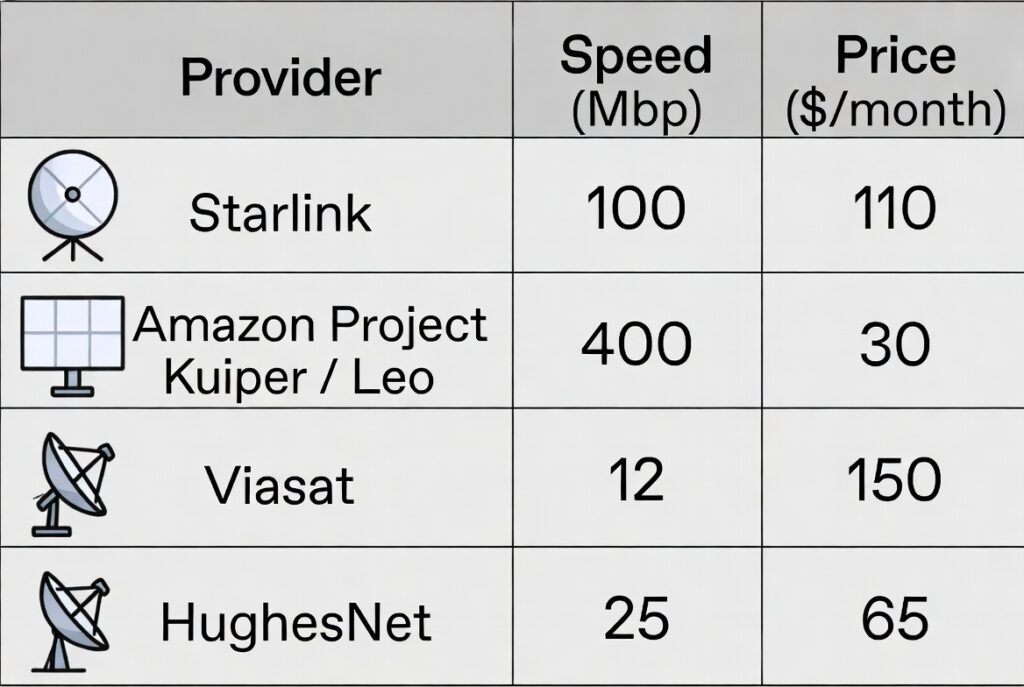
Amazon Leo: Around 390+ satellites in orbit with initial service planned for later 2026 in select countries including the US, UK, France, Germany, and Canada. Expected speeds reach 100-400 Mbps with low latency. Terminals target under $400. AWS integration benefits cloud users.
It trails Starlink in scale today but promises competitive pricing and enterprise features. Early betas focus on businesses.
Viasat: GEO-based with plans up to 150 Mbps advertised (real-world often lower, around 37 Mbps in tests). Unlimited data options start near $70-150 per month. Equipment costs $250-300 or rental fees. Professional installation is common.
It works well for steady rural connections where latency is less critical.
HughesNet: Delivers 50-100 Mbps with plans from about $40-120 monthly. Jupiter 3 satellite supports consistent performance and data optimization. Contracts often apply, with soft data caps on lower tiers.
Many rural users appreciate the reliable setup and support.
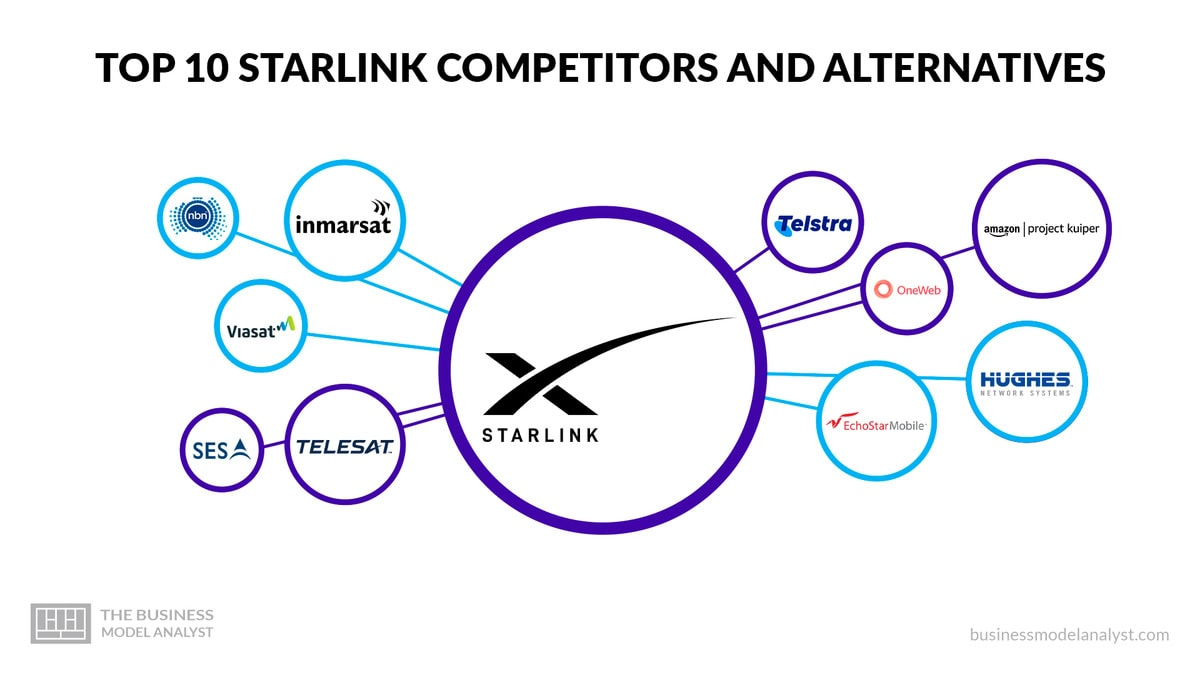
Other options include OneWeb (enterprise LEO, ~50 Mbps, government focus), Telesat Lightspeed (planned low-latency for business), and regional services. Chinese constellations like Qianfan expand internationally.
Alt text: Visual comparison of major Starlink competitors including dishes and key specs.
Non-Satellite Alternatives to Starlink
Cellular 5G often outperforms satellite where signals reach. T-Mobile and Verizon home internet deliver 100-500+ Mbps at lower costs in covered areas. Multi-carrier routers and signal boosters extend range for RVers and boaters.
Fixed wireless or emerging fiber fills gaps in some rural spots. Public Wi-Fi plus mobile hotspots provides backups. For full off-grid needs, satellite remains essential, but many travelers use cellular primarily and activate satellite only when required to cut costs and power use.
Practical step: Check coverage maps from multiple carriers, then test with a temporary hotspot before committing.
Starlink Competitors by Use Case – Which to Choose?
Rural Residential: Starlink or upcoming Amazon Leo suits high-speed demands. Viasat or HughesNet fits tighter budgets with professional support. Calculate 5-year costs including equipment and potential congestion fees.
Mobile (RVs, Boaters, Nomads): Cellular leads for speed and cost. Pair it with a compact satellite like Starlink Mini for dead zones. Obstructions from trees or terrain challenge all satellite dishes—use apps to find clear spots. Power draw is lower with cellular setups.
Business/Enterprise: OneWeb, Telesat, or Amazon Leo offer SLAs, symmetrical speeds, and cloud integration. Starlink serves aviation and maritime well today.
International/Global: Availability varies by regulation. Starlink leads in many remote regions, but local options or Chinese providers may be more accessible or affordable in certain markets.
Pricing, Hidden Costs, and Long-Term Value Comparison
Starlink residential plans run $80-120 monthly with $349+ equipment (sometimes discounted). Add power consumption, which runs higher than cellular.
Viasat and HughesNet often have lower entry prices but may include contracts or softer data limits that throttle during peaks. Amazon Leo aims for affordability, though exact consumer pricing is pending.
Track total costs: equipment, installation, monthly fees, overages, and electricity. Users in congested areas sometimes face temporary slowdowns or surcharges. Redundancy—such as cellular plus one satellite—reduces risk of outages.
Example: A rural household might save by choosing HughesNet for baseline use and adding cellular where possible.
Future Outlook – Competition in 2026 and Beyond
Amazon Leo targets broader service before year-end with hundreds more satellites launching. AST SpaceMobile advances direct-to-cell coverage. Launch capacity remains a bottleneck for all new entrants.
Analysts expect price pressure and improved performance across the board. Geopolitical factors influence global expansion, with multiple nations building their own systems. Starlink continues rapid growth and upgrades, including higher-capacity satellites.
Monitor developments closely—2026-2027 will bring more choices and potential shifts in value.
How to Choose the Right Starlink Competitor – Decision Guide
- Check availability at your address or travel routes using provider tools.
- List your must-haves: minimum speed, latency for video, data needs, budget.
- Compare total 1- and 5-year costs.
- Read recent user reports for your area.
- Test with short-term options if available.
- Plan for backups to avoid single-point failures.
Common Questions
- Is Amazon Leo available now? Initial service rolls out later 2026.
- Which has better latency? LEO options like Starlink.
- Best for RVs? Cellular primary with satellite backup.
Starlink sets a high bar, but Viasat, HughesNet, Amazon Leo, and cellular alternatives each solve specific problems effectively. Evaluate based on your exact situation, test where possible, and combine services for reliability. Check provider sites directly for latest details, as the market evolves quickly. This approach helps you get connected without overspending or unexpected issues.