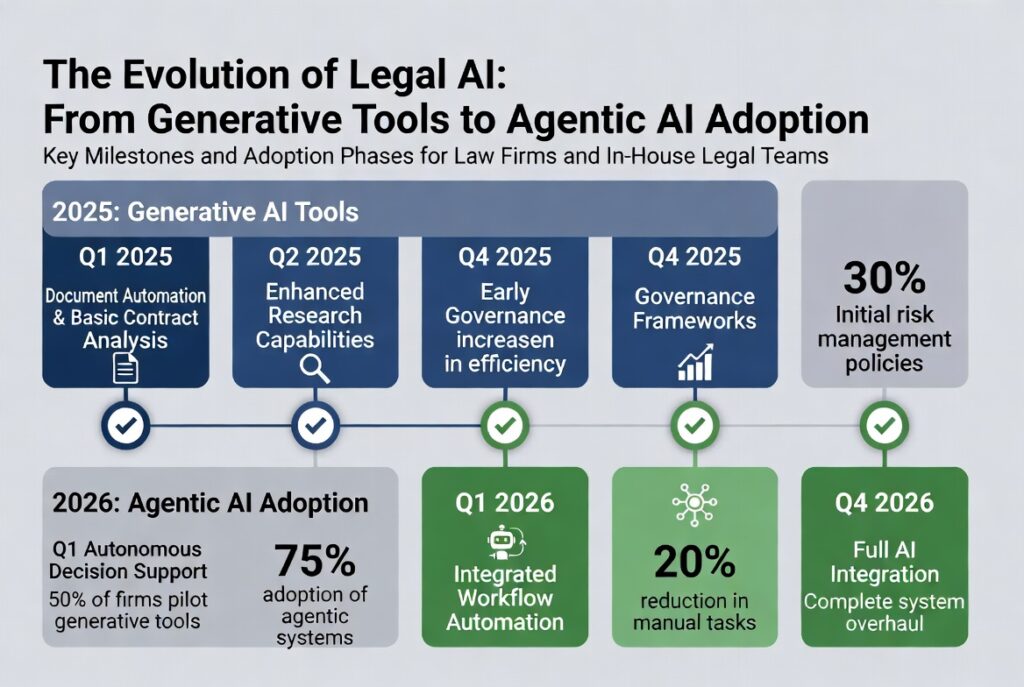

Legal tech AI adoption has more than doubled in the past year. 69% of legal professionals now use generative AI tools for work, up from 31% previously. Legal-specific tools see usage at 42%, with firm-level adoption rising to 34%.
In-house teams lead in many areas, with corporate legal AI adoption jumping from 23% to over 50% in recent surveys. Large firms report 80% attorney usage of specialized tools at places like Norton Rose. Yet governance lags: 43% of firms lack any formal AI policy.
This gap creates real risks around hallucinations, data security, and compliance. Leading teams address it with structured frameworks while deploying agentic AI for multi-step tasks like contract management and research.
Recent Developments Shaping Legal Tech AI
Product launches focus on autonomy. Spellbook released its Autonomous Contract Management system in early access. It pulls documents from management systems, reviews, and redlines them using agentic AI.
Perplexity AI added agentic capabilities for litigation use cases. Firms like Hecker Fink test these integrations for document analysis and research.
Proprietary tools emerge too. HSF Kramer and Shoosmiths built platforms with Microsoft and partners for contract review. These moves signal a shift from general chatbots to embedded, secure workflows.
Top Legal AI Tools Worth Evaluating
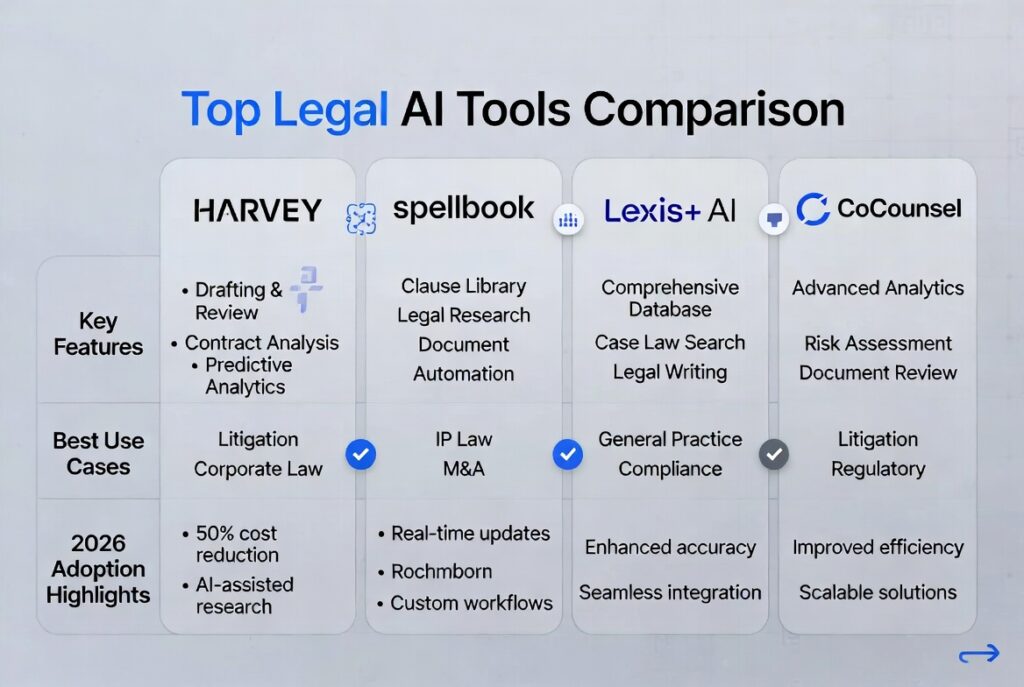
Compare options based on your practice. Harvey excels in complex analysis, research, and custom workflows for BigLaw. Spellbook targets transactional work with strong Word integration and contract focus.
Lexis+ AI and Thomson Reuters CoCounsel provide grounded research with citations from vast databases. They suit litigation and regulatory work. Clio AI helps smaller firms with practice management and basic automation.
For in-house teams, tools like Ironclad or Luminance streamline CLM. Emerging options such as Legora and Andri offer agentic features for specific jurisdictions or workflows.
Choosing the Right Tool: A Practical Framework
Start with your biggest pain points. Contract-heavy practices benefit most from Spellbook or Definely. Litigation teams gain from Harvey or CoCounsel for research and early case assessment.
Check security and integration first. Enterprise tools offer better audit trails and DMS connectivity. Budget matters: some scale to solo practitioners while others target AmLaw 100.
Test with real matters. Measure time saved and error rates before full rollout. Many users report 1-10 hours weekly savings, but results vary by implementation.
Agentic AI: Moving Beyond Simple Generation
Agentic systems go further than chat responses. They plan, execute multi-step tasks, and adapt with minimal input. In legal work, this means autonomous contract review, regulatory monitoring, or memo drafting.
Real examples include pulling documents, analyzing clauses against playbooks, suggesting redlines, and flagging risks. Thomson Reuters and others integrate these into CoCounsel for research plans and structured outputs.
In-house teams use agentic AI for compliance horizon scanning and eDiscovery prioritization. Law firms apply it to due diligence in M&A. Human oversight remains essential for final decisions.
Implementation Tips for Agentic Workflows
Define clear goals first. Start small with one process, such as contract intake. Set checkpoints for review. Document prompts and outputs for audit trails.
Train teams on oversight rather than just prompting. Successful adopters combine top-down policy with bottom-up experimentation. Track metrics like review time and revision rates.
Governance and Risk Management Essentials
Governance separates successful deployments from problematic ones. The EU AI Act classifies many legal AI uses as high-risk, requiring transparency and oversight. ABA opinions stress understanding tool limitations and protecting confidentiality.
Build a basic policy covering approved tools, data handling, and disclosure. Provide training — over half of firms currently offer none. Create audit processes with explainable outputs and human sign-off.
Address hallucinations directly. Use grounded models with citations. Implement double-check protocols for client-facing work. This builds defensibility and client trust.
Measuring ROI and Business Impact
Focus on more than hours saved. Track quality improvements, faster matter turnaround, and client satisfaction. Some firms shift value to advisory work as AI handles routine tasks.
Corporate teams scale resources without immediate headcount increases. Law firms experiment with new pricing models tied to efficiency. About one-third of small firms report revenue impact so far, often because pricing stays unchanged.
Looking Ahead in Legal Tech AI
Expect deeper integration of private knowledge graphs and specialized models. Agentic adoption will grow as tools mature. Regulatory scrutiny will increase, making governance a competitive advantage.
Firms that combine AI with strong human judgment will stand out. Skills in orchestration and critical evaluation matter more than basic prompting.
Practical Next Steps
Audit your current tools and workflows this quarter. Draft a simple governance policy. Pilot one agentic use case with clear metrics. Stay informed through sources like Artificial Lawyer or Law.com Legaltech News.
For deeper reading on AI systems, see the Wikipedia page on Artificial Intelligence.
Legal tech AI delivers real productivity gains when implemented thoughtfully. Focus on solving specific problems, maintaining oversight, and measuring outcomes. This approach minimizes risks while capturing value in 2026 and beyond.