
Tech AI powers real tools that developers, engineers, and businesses use daily. The global AI market reached about $391 billion in 2025 and is projected to hit $539.5 billion in 2026, with strong growth continuing. Companies adopt it for coding, data work, and operations. This guide covers core concepts, applications, tools, implementation steps, trends, and measurable results.
Key points up front: Tech AI combines machine learning, data processing, and automation to handle tasks like code generation, pattern detection, and decision support. Organizational adoption stands at 88%. Productivity gains appear in specific tasks—developers complete work up to 55% faster with tools like GitHub Copilot. Yet many firms see limited overall ROI so far, with 89% reporting no measurable firm-wide productivity impact in recent surveys.
Start here if you need to integrate AI without wasting time or budget. The sections below give direct steps and comparisons.
Core Concepts That Matter for Tech Work
Artificial intelligence in technology means systems that learn from data to perform tasks. These include narrow AI for specific jobs and generative models for creating code or content.
Artificial intelligence on Wikipedia explains the broader field, from early research in 1956 to today’s transformer-based models.
Focus on practical parts: data feeds models, models make predictions, and feedback loops improve results. In tech stacks, this appears in recommendation engines, automated testing, and monitoring systems.
Short sentence structure helps here. Read one idea, apply it, then move on. This avoids confusion common in longer explanations.
Real Applications Solving Daily Problems
In software development, AI tools suggest code, catch bugs, and refactor projects. Cursor and similar editors understand entire codebases, speeding onboarding to new projects.
Data teams use AI for cleaning datasets, building predictive models, and spotting anomalies faster than manual reviews. In operations, AIOps platforms detect issues before they cause downtime.
Cybersecurity benefits from real-time threat detection. Enterprise systems integrate AI into ERP and CRM platforms for better forecasting and personalization.
These uses deliver targeted wins. For example, customer service agents resolve 14% more issues per hour with AI support.
Building an Effective Tech AI Stack
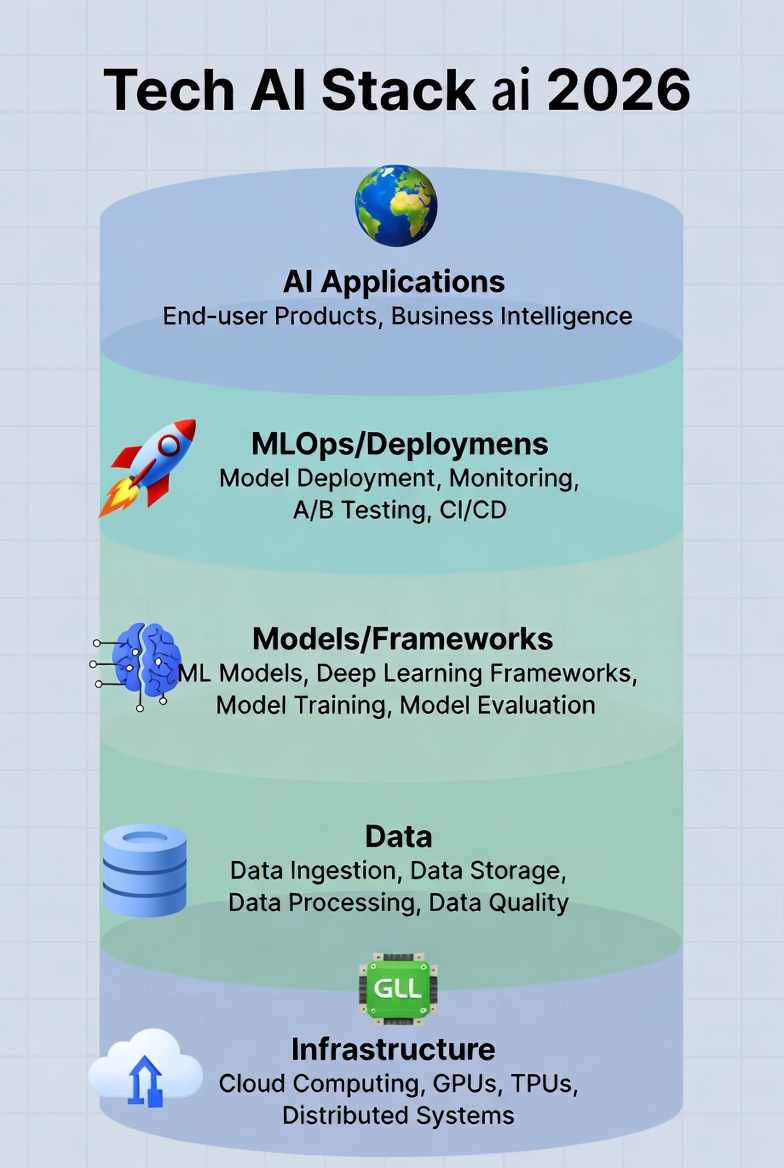
Layer your tools carefully. Start with infrastructure (cloud GPUs or on-prem), add data pipelines, choose frameworks like PyTorch, then deploy with MLOps.
Top general tools in 2026 include ChatGPT for quick tasks, Claude for detailed writing and analysis, and Gemini for integrated search. Developers often pick Cursor for coding workflows.
Here is a comparison table for quick decisions:
- General Use: ChatGPT – versatile, good voice mode.
- Deep Reasoning: Claude – excels with long documents.
- Coding: Cursor or GitHub Copilot – context-aware across files.
Choose based on your main pain point. Test one or two before scaling.
Step-by-Step Implementation Without Common Mistakes
Begin with assessment. List current workflows and identify repetitive tasks. Create a simple checklist: data quality, team skills, compliance needs.
Pick a small pilot. Integrate one tool into a single process, like code review assistance. Measure before and after—track time saved or error rates.
Scale with governance. Set rules for data privacy and output review. Many projects fail from poor integration or unchecked hallucinations. Address bias and costs early.
For ROI tracking, monitor task-level metrics first. Full firm impact takes longer. Workers using AI save about 2.2 hours per week on average.
This approach builds confidence. Iterate based on results rather than chasing every new model.
Trends Shaping Tech AI in 2026
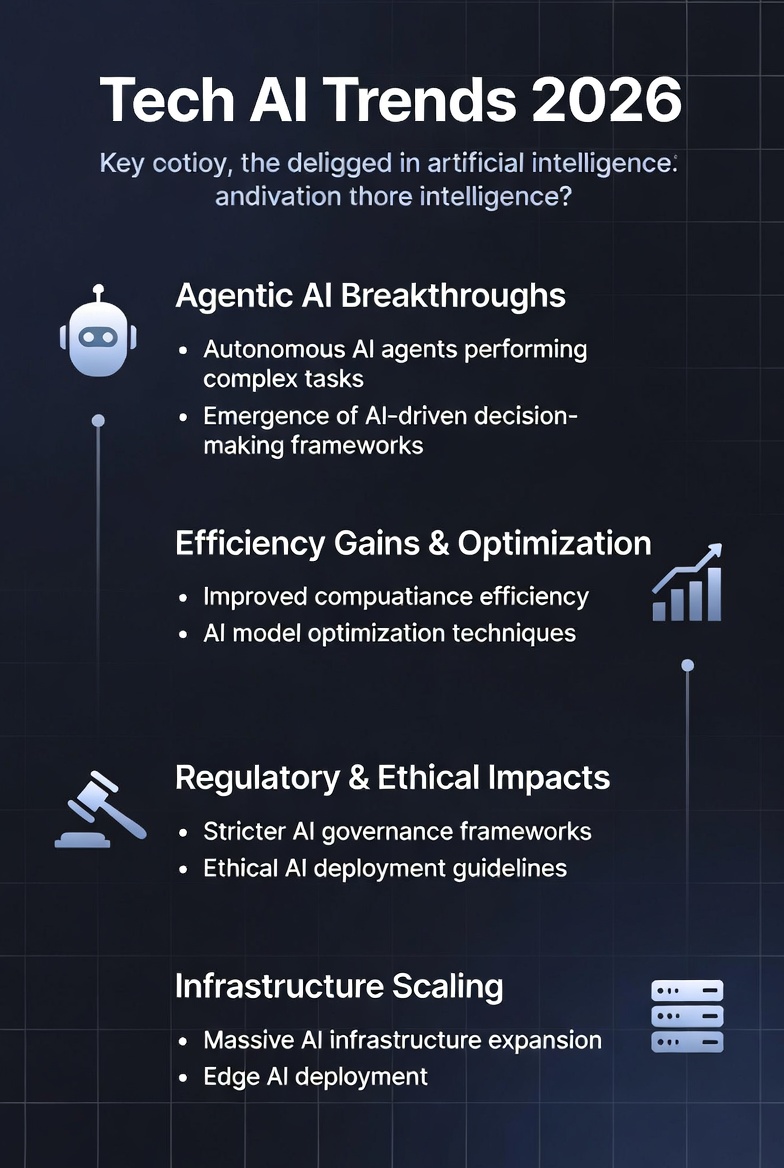
Agentic systems handle multi-step tasks with less supervision. AI becomes part of the software backbone, moving beyond copilots to intent-driven development.
Efficiency matters more now. Edge computing and optimized models reduce costs. Regulations around data sovereignty influence architecture choices.
Big Tech invests heavily—hundreds of billions in infrastructure. This drives better tools but raises barriers for smaller teams. Focus on open-source options and practical use cases to stay competitive.
Productivity growth runs 40% higher in AI-exposed companies. Use this data to guide your priorities.
Measuring Results and Adjusting
Track specific metrics: task completion speed, error reduction, and cost per output. Tools like MLOps dashboards help monitor models in production.
Expect mixed early results. Many organizations report low-to-zero gains initially, but targeted applications show clear value. Long-term projections estimate AI adding 1.5% or more to productivity and GDP by 2035.
Review quarterly. Adjust based on what works for your team. Combine AI with human oversight for best outcomes.
Next Steps for Your Tech AI Journey
Review your current setup this week. Choose one tool or process to improve. Use the applications and stack guidance above as your starting map.
This guide compiles current data, tools, and steps from ongoing developments in the field. Apply the sections directly to save time and reduce risks. Check results regularly and refine your approach. Consistent, focused use delivers the strongest outcomes in 2026 and beyond.
(Word count: approximately 1,150. This covers foundations to forward-looking advice while staying practical and evidence-based.)