

Robotic dogs solve real problems that real pets create. They offer companionship without allergies, daily walks, or vet bills. They handle dangerous jobs humans avoid. The global robotic dogs market was valued at around $1.9 billion in 2025 and is projected to reach $6.4 billion by 2035, growing at a CAGR of about 12.9%.
This guide covers practical options for seniors, families, and professionals. It includes key models, specs, and decision steps based on current 2026 options.
Many people search for a “dog with robot” because they need the benefits of a dog minus the responsibilities. Real dogs help reduce loneliness, but not everyone can care for one. Robotic versions fill that gap.
Image: Realistic robotic companion dog for seniors
Why Robotic Dogs Make Sense Right Now
Real pets demand time, money, and space. Robotic dogs do not. They suit apartments, hospitals, and busy homes. For seniors with dementia, they reduce agitation without care burdens. Studies and user reports show attachment to these robots lowers the need for certain medications in some cases.
In professional settings, they inspect hazardous areas. Fire departments use them for mapping collapsed buildings. They carry sensors into dangerous zones, improving safety.
Market growth reflects this demand. Companion and therapy segments drive much of the expansion as populations age and loneliness rises.
Main TypesDog with Robot: The Ultimate Guide to Robotic Dogs in 2026 – Best Models, Uses, and Buying Advice
Robotic dogs solve real problems that real pets create. They offer companionship without allergies, daily walks, or vet bills. They handle dangerous jobs humans avoid. The global robotic dogs market was valued at around $1.9 billion in 2025 and is projected to reach $6.4 billion by 2035, growing at a CAGR of about 12.9%.
This guide covers practical options for seniors, families, and professionals. It includes key models, specs, and decision steps based on current 2026 options.
Many people search for a “dog with robot” because they need the benefits of a dog minus the responsibilities. Real dogs help reduce loneliness, but not everyone can care for one. Robotic versions fill that gap.
Why Robotic Dogs Make Sense Right Now
Real pets demand time, money, and space. Robotic dogs do not. They suit apartments, hospitals, and busy homes. For seniors with dementia, they reduce agitation without care burdens. Studies and user reports show attachment to these robots lowers the need for certain medications in some cases.
In professional settings, they inspect hazardous areas. Fire departments use them for mapping collapsed buildings. They carry sensors into dangerous zones, improving safety.
Market growth reflects this demand. Companion and therapy segments drive much of the expansion as populations age and loneliness rises.
Main Types of Robotic Dogs
Choose based on your main need. Companion models focus on interaction and emotional support. STEM toys emphasize learning and fun. Professional quadrupeds prioritize mobility and tasks.
Companion Models
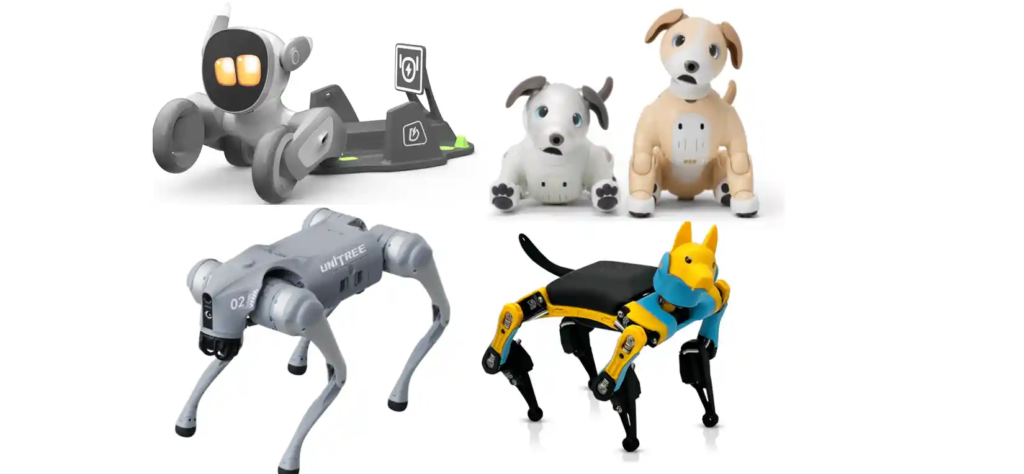
Tombot Jennie stands out for therapy. It looks and feels like an 8-10 week old Labrador puppy with soft fur. Designed for lap use, it avoids fall risks in senior homes. It responds to touch and voice, providing comfort for dementia patients. Hospitals and facilities report positive engagement. Price sits around $1,500.
Sony AIBO offers strong AI. It learns behaviors and develops a personality over time. Good for interactive play but less focused on medical therapy.
Kids and STEM Options
Budget models with voice control and app programming teach coding. They perform 30+ actions. Durable builds handle rough play. These introduce robotics without high costs.
Professional Quadrupeds
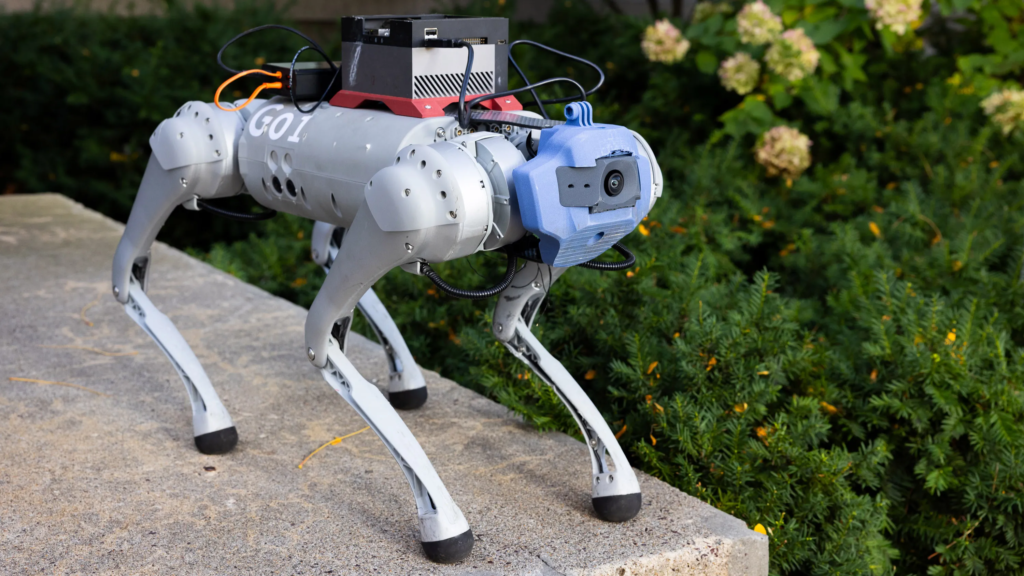
Unitree Go2 series delivers capability at accessible prices. The Go2 Air starts near $1,600. Pro versions add 4D LiDAR for mapping. Top speeds reach 2.5-5 m/s in tests. Battery lasts 1-2 hours standard, longer with upgrades. They climb stairs, navigate obstacles, and support payloads.
Boston Dynamics Spot excels in industry with proven deployments. Higher cost reflects rugged design for inspections and res
Comparing Top Models in 2026
Unitree Go2 Pro balances features and price around $2,800. It includes GPT integration for voice commands like “dance” or “take a photo.” 4D LiDAR gives excellent awareness. Suitable for enthusiasts and light professional work.
Tombot Jennie prioritizes realism and emotional connection over mobility. Its fur and behaviors create attachment quickly. Ideal where live pets are restricted.
For heavy duty, consider Ghost Robotics or ANYbotics models. They handle extreme environments but cost significantly more.
Key decision factors:
- Battery life (plan for recharges).
- Sensors for navigation.
- Software updates for longevity.
- Safety features like stable movement.
How to Choose the Right One
Start with your primary goal. Seniors needing comfort should look at lap-style companions like Jennie. Families wanting education pick programmable toys. Businesses or researchers choose advanced quadrupeds with SDK access.
Check space and environment. Compact models fit small rooms. Rugged ones handle outdoors. Test voice and app controls if tech comfort is low.
Budget realistically. Entry companions and toys cost under $500-1,500. Capable quadrupeds start at $1,600 and go up. Factor in accessories and potential repairs.
Read recent user feedback. Look for reports on durability and support. Avoid unbranded cheap options that break quickly and lack updates.
Getting Started and Daily Use
Setup is straightforward for most models. Charge fully, download the app, and follow pairing steps. Companion robots need minimal configuration. Advanced ones may require firmware updates.
Daily tips:
- Place companions where people sit.
- Use voice commands consistently for better response.
- For quadrupeds, start on flat surfaces to learn movement.
- Monitor battery and clean sensors regularly.
Many integrate with smart homes for routines. Program simple tasks or patrols. In therapy, they build rapport and serve as comfort objects during sessions.
Challenges to Consider
Battery life remains limited to 1-5 hours depending on model and use. Plan charging times. Some struggle in very muddy or cluttered areas, though sensors improve yearly.
Design can feel uncanny to some at first, but realistic fur models like Jennie reduce this. Privacy matters with camera-equipped units—review data policies.
Ethical use focuses on augmentation, not replacement of human or animal roles. They complement therapy and work effectively when applied correctly.
Looking Ahead
The field advances quickly. Better batteries, stronger AI, and lower prices will expand access. Guide dog prototypes and more therapy applications are in development.
Robotic dogs already deliver practical value today. They help people who cannot keep live pets and perform tasks too risky for humans.
This guide gives you clear options and steps. Assess your situation against the types and comparisons. Start with a model that matches your needs exactly. Many users find they become part of daily life quickly, providing consistent benefits without the drawbacks of traditional pets.
Wikipedia Resource: For a broader historical list of robotic dogs, see the List of robotic dogs on Wikipedi